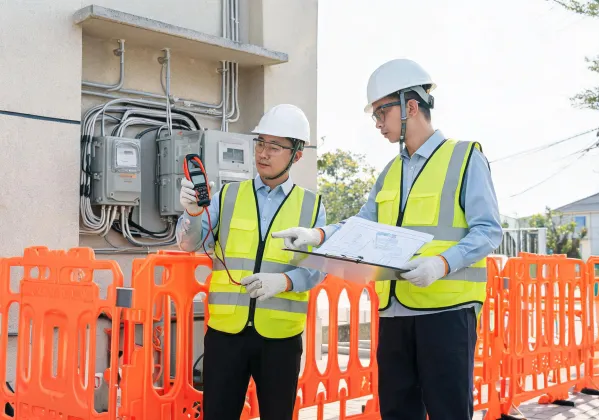
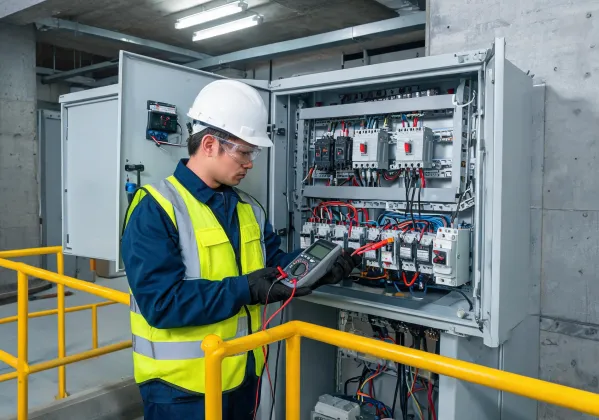
Multimeter applications across an industrial electrical facility

Fluke Multimeter applications across electrical work

The correct instrument follows the circuit location, expected signal, transient environment, required uncertainty, conductor access, and work procedure—not a single universal model ranking.

Choose the measurement context first

Motor control diagnostics

Industrial Automation

PLC supplies, contactor coils, sensors, motor circuits, and variable frequency drives can present different waveforms and access constraints. True-RMS response may matter on distorted signals, while low-pass filtering can help when a drive output complicates interpretation. Confirm the model method and bandwidth rather than assuming every displayed value is equivalent.
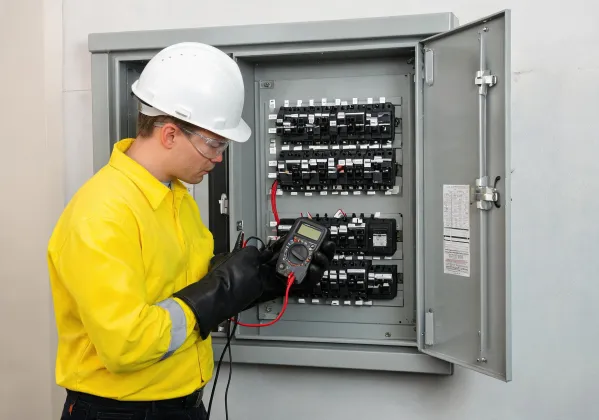

Commercial distribution panel testing

Commercial Buildings

Commissioning and service work spans receptacle circuits, lighting controls, HVAC equipment, and distribution panels. CAT rating reflects transient exposure by location. It does not authorize a work method; local procedure, equipment condition, qualified-person rules, and lead integrity remain decisive.

Electronics troubleshooting bench

Electronics Service

Low-energy circuits may prioritize resolution, input impedance, burden voltage, capacitance range, and fine probe access. An industrial high-category meter can still be less convenient for a delicate board-level task than an instrument selected around low-level performance.

HVAC capacitor and temperature check

HVAC and Refrigeration

Capacitance, temperature, microamp flame-sensor current, inrush, and clamp measurements can reduce tool changes. Accessory interfaces and specified test methods need review because not every meter measures every HVAC variable directly.

Utility service entrance measurement planning

Utility and Service Work

Higher-energy locations demand careful attention to category marking, voltage rating, input protection, lead condition, and applicable procedures. Printed ratings must be confirmed on both the meter and accessories; the lowest-rated part limits the assembled system.

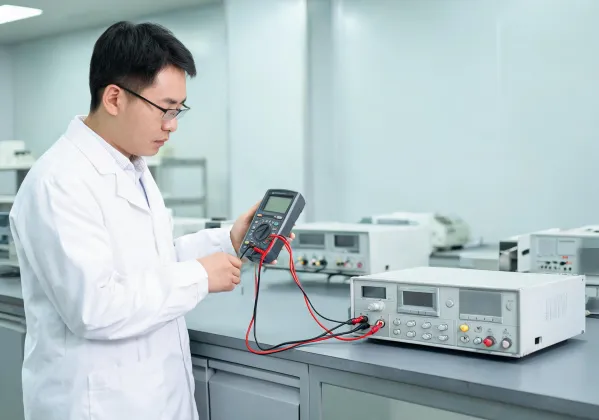
Calibration laboratory verification

Quality and Calibration

Acceptance depends on the required uncertainty, published accuracy expression, test conditions, calibration interval, and traceability expectations. Display counts alone do not establish whether an instrument fits a controlled measurement process.

4 inputsTest point, signal, exposure, procedure
CAT contextLocation matters with voltage
Full systemMeter, leads, probes, fuse
Exact modelManual and markings govern

Accuracy versus safety category is a false shortcut

Accuracy describes how close a reading may be under specified conditions; measurement category addresses transient withstand in defined installation locations. Neither substitutes for the other. A bench task can demand finer resolution, while distribution work can demand a higher exposure rating. Environmental limits, frequency response, crest factor, input impedance, and accessory ratings can further narrow the suitable set.

Map your application before comparing models

Share the circuit location, expected range, functions, tolerance, access method, and destination market.

Use the Selection Guide